
The Multi-Cultural, Non-Denominational Quarterly Magazine that
EVANGELIZES, EDUCATES & EDIFIES!

©2011 All rights reserved. View Copyright Notice.


At The Cross
By Minister Raymond Williams

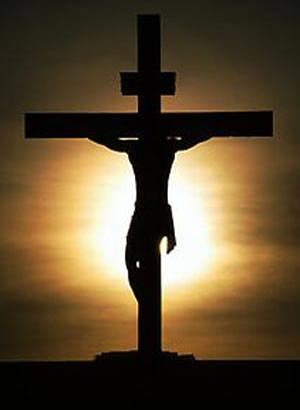
Have you ever wondered what it was like for Jesus to hang on
the Cross? We know that it was painful, and yes we know it was humiliating. We
know, but to what degree do we understand His torment. What if it were me, what
if it were you?
Let’s start from the beginning; Jesus knew what was going to
happen. All along He had told His disciples that He must suffer for mankind. As
He prayed he said; "Father, if it is Your will, take this cup away from
Me; nevertheless, not My will, but Yours, be done." Then an angel appeared
to Him from heaven, strengthening Him. And being in agony, He prayed more
earnestly. Then His sweat became like great drops of blood falling down to the
ground. When He finished praying, He turned to look at His disciples to find
them asleep and oblivious to all that was happening.
When the Pharisees seized Jesus, they took Him to the High
Priest house. Now the men who held Jesus mocked Him and beat Him. And having blindfolded Him, they struck Him
on the face and asked Him, saying; "(Go ahead) Prophesy! Who is the one
who struck You?" And many other things they blasphemously spoke against
Him.
Before Jesus went to the cross, He suffered the most
excruciating pain known to man at the hands of man. Jesus was found guilty at the
mock trial before the Sanhedrin, and found guilty of nothing, but guilty,
nevertheless. The Lord was brought before the governor. The Governor (Pontius
Pilate) ordered Jesus scourged.
Jesus was scourged (beaten brutally) with rods and with
an instrument called a Flagellum. The Flagellum consists of a handle with three
lashes of thongs of leather or cord; with pieces of metal and or bone fasten to
them. After striking someone with it, it is allowed to remain on the body for
an extra moment, it is then pulled quickly bringing with it flesh and blood.
Jesus was brought back to Pilate after being scourged.
Pilate thought that the beating was enough; he could find no guilt in Jesus. It
was Pilate’s desire to set Jesus free. He knew that it was only because of envy
that Jesus was handed over to him. Pilate’s wife had also sent him the message;
“Have nothing to do with this man because I have suffered a great deal in a
dream because of him. Pilate in a feeble attempt at diplomacy told the crowd of
people assembled, that as an act of generosity, he was going to allow someone
to go free, ‘would you rather I released the murder Barabbas or this man
Jesus.’ Barabbas was a despicable man, a liar, a thief and a murderer. To
Pilate’s surprise the crowd chose Barabbas.
The Crucifixion of Jesus was the most horrible form of
punishment/torture and execution known to man. The one to be crucified was
stripped naked of all his clothes, and then followed the most awful moment of
all. He was laid down upon the implement of torture. His arms were stretched
along the cross beams and at the center of the open palm the point of a huge
iron nail was placed, which, by the blow of a mallet, was driven home into the
wood. Then through either foot or possible both together, as they were placed
one over the other, another huge nail tore its way through the then quivering
flesh. Whether the sufferer was bound to the cross it is not sure, but to
prevent the hand and the feet from being torn away by the weight of the body,
which could “rest upon nothing but four great wounds,” there was along the
center of the cross, a wooden projection strong enough to support, at least in
part, a human form. Then that “accursed tree” with its living human burden was
slowly heaved upwards, and then the end fixed firmly in a hole in the ground.
Death by crucifixion included all the horror and pain
that death has to offer. Dizziness, cramps, thirst, starvation, sleeplessness,
traumatic fever, tetanus, public shame, long suffering (up to three days before
death), the horror of anticipation, the mortification of unattended wounds, all
intensified just up to the point at which they can be endured, but stopping
short of the point which would give to the sufferer the relief of
unconsciousness.
This unnatural position made every movement painful; the
lacerated veins and crushed tendons throbbed with incessant anguish; the
wounds, inflamed by exposure, gradually gangrened; the arteries, especially of
the head and stomach became swollen and oppressed with surcharged blood. And while each variety of misery went on
gradually increasing, there was added to them the pang of a burning and raging
thirst.
Jesus endured this horrible pain, suffering and
humiliation just for me. He did it because His Father asked Him, but it was
done for me. I believe it was done for you too. Do you think that you could
have endured the Cross? I know that I couldn’t. I don’t believe that you could
either. He did it for us. He did it for humanity. This, however, is not the end
of the story.
Jesus died hanging on that Cross; they made sure that He
was dead by stabbing Him in His side with a spear. I am so glad that He didn’t
remain dead. Jesus said to His disciples; “Destroy this temple, and in three
days I will raise it up.” On the third day my Lord came out of His tomb
(sepulcher) and was seen by more than five hundred people. The moral of this
wonderful story is: everything that Jesus said is true. Jesus rose from the
dead. He said ‘death has no sting',’ and He said that “I go to prepare a
place for you. It is all true. He kept His promise. He rose from the
dead.
I am reminded of a song that says; “Where would I be if
Jesus didn’t love? Where would I be if Jesus didn’t care? Where would I be if
He didn’t sacrifice His life? O but I’m glad, so glad He did.”
Minister Raymond E. Williams Jr., is an Associate Minister at Morning Star Missionary Baptist Church, in St. Albans, New York. His area of expertise is outreach. He heads the Prison Ministry Teams at Morning Star Missionary Baptist Church. Minister Williams is the founder of Brother Raymond and Friends (Homeless outreach ministry). He is also the former Editor of The Herald and The Minister's Speak newsletters (church publication). Minister Williams is also a good friend of Ronald Wiggins. Find out more about his ministry by visiting http://www.brotherraymondandfriends.com
